
Saturday, December 31, 2011


Saturday, September 10, 2011
More Plans added
The following plans have been added to the plans and drawings page:
- HMS Revenge
- HMS Enterprize
- HMS Royal Caroline
- USS Constitution
- Prins Willem
- Vassa
- HMS Resolution
- HMS Kingfisher
- HMS Serapis
- HMS Leopard
Saturday, August 6, 2011
New Plans added
Some new plans have been added to the Plans and drawings page:
- Schooner Benjamin w. Latham
- Frigate Raleigh
- Revenue Cutter Alert
- 86 gun ship Le Phenix
At last count I have 311 plans to load and still adding more. The set of detail drawings of HMS Victory are almost complete, I plan to post them in PDF format soon I hope.
Saturday, June 25, 2011
The Gulf of Genoa, 13-14 March 1795
The Gulf of Genoa
Vice-Admiral William Hotham, commander of the British fleet in the
Martin, steering for Corsica with 5,000 troops to retake the island. After two
Days of ineffective maneuvering, Hotham finally closed when two French ships
Became fouled, fell astern and suffered severe damage from British fire. The
Following morning the two fleets engaged at long range but with no decisive
Result, the French escaping to the west by mid-afternoon, abandoning the
Crippled Ca Ira and Censeur, which had taken the former in tow, to capture.
Van:
Captain 74 Captain Samuel Reeve
Tancredi (Neap.) 74 Captain Chev. Caraccioli
Princess Royal 98 Vice-Admiral Samuel Goodall, Captain John Purvis
Agamemnon 64 Captain Horatio Nelson
Poulette 26 Commander Ralph Miller
Tarleton 14 Captain Charles Brisbane
Minerva (Neap.) 32 ---
Pilade (Neap.) --- ---
Centre:
Illustrious 74 Captain Thomas Frederick
Courageux 74 Captain Augustus Montgomery
Britannia 100 Vice-Admiral William Hotham, Captain John Holloway
Egmont 74 Captain John Sutton
Windsor Castle 98 Rear-Admiral Robert Linzee, Captain John Gore
Inconstant 36 Captain Thomas Fremantle
Meleager 32 Captain George Cockburn
Rear:
Diadem 64 Captain Charles Tyler
St George 98 Vice-Admiral Sir Hyde Parker, Captain Thomas Foley
Terrible 74 Captain George Campell
Fortitude 74 Captain William Young
Fox cutter Lieutenant John Gibson
Sunday, June 19, 2011
Chronology of Royal Navy Conflict 1792 - 1815
Chronology of Royal Navy Conflict 1792 - 1815
20 April 1792 The French Revolutionary Wars begin with the French declaration of war on Austria ; Prussia
I February 1793 France declares war on Britain, Holland and Spain, who join Austria and Prussia; Britain begins blockade of Brest and Toulon with the intention of halting the importation of food and other commodities; the Royal Navy, working in concert with the Army, begins defense of Britain's West Indian possessions and the seizure of enemy colonies
21 May 1794 Captain Horatio Nelson, with a body of sailors and marines, captures Bastia , Corsica , marking his first action in a long and distinguished career
I June 1794 British victory over the French off Ushant, known as the 'Glorious First of June'; although 2S ships of the line commanded by Admiral Earl Howe defeat 26 French ships under Rear-Admiral Villaret-Joyeuse, a vital grain convoy from America nevertheless reaches port
January I795 French invade and conquer the United Provinces (Holland ), converting it into a satellite state known as the Batavian Republic
16 May 1795 Treaty of Basel ; Prussia and Spain abandon the First Coalition and conclude peace with France
19 August 1796 Treaty of San IIdefonso; Spain allies herself with France, so imperiling the position of the British Mediterranean Fleet, which is obliged to evacuate Corsica and withdraw from the Mediterranean, apart from Gibraltar
8 October 1796 Spain declares war on Britain
14 February I797 Admiral Sir John Jervis, despite being outnumbered by 15 to 27 ships, defeats the Spanish at the battle of St Vincent; Nelson executes a remarkable maneuver by engaging seven enemy ships, two of which he boards and captures in succession
I I October I797 The British Channel Fleet, under Admiral Adam Duncan, defeats the Dutch fleet under Vice-Admiral Jan de Winter, off the north-west coast of Holland at Camper down; Duncan captures I I enemy ships and the Dutch commander
17 October 1797 Treaty of Campo Formio; Austria formally recognizes French annexation of the Austrian Netherlands (Belgium
I July 1798 General Napoleon Bonaparte lands in Egypt with an expeditionary force intended to capture Suez and threaten British control of India
1-2 August 1798 Decisive British victory over the French at the battle of the Nile in Abukir Bay
29 December 1798 Russia , by allying herself with Britain , establishes the Second Coalition, to which Turkey , Naples and Portugal adhere; Austria
August-October I799 An Anglo-Russian expeditionary force fails to occupy the Batavian Republic , though the enemy fleet is captured; Russia leaves the Second Coalition as a result of failures here and in Switzerland
16 December 1800 Russia , Prussia , Denmark and Sweden form the League of Armed Neutrality as a protest against the British practice of maritime search and seizure; the existence of the League threatens Britain
9 February 180 I Treaty of Luneville; Austria concludes peace with France , which receives further territorial concessions in northern Italy
8 March 1801 A British expeditionary force lands in Abukir Bay , beginning a campaign that will force the French to surrender Egypt
2April 1801 British naval victory at the battle of Copenhagen , where Nelson, second in command to Admiral Hyde Parker, destroys the Danish fleet while it sits anchored under the guns of the city's fortifications; in response, Russia
27 March 1802 Treaty of Amiens between Britain and France concludes the French Revolutionary Wars; the former restores all French and French allied colonial possessions apart from Ceylon and Trinidad; Britain pledges to evacuate Malta
18 May 1803 Britain declares war on France
19 October 1803 Under coercion, Spain agrees to pay a substantial subsidy to France
12 December 1804 Spain declares war on Britain
I I April 1805 Britain and Russia conclude an offensive alliance, forming the Third Coalition, to which Austria and Sweden
21 October 1805 Nelson decisively defeats the Franco-Spanish fleet under Villeneuve at the battle of Trafalgar, the most decisive naval action of modern times
2 December 1805 Napoleon defeats the combined Austro-Russian army at Austerlitz in Moravia , obliging Austria
6 October I 806 War of the Fourth Coalition formed, with Prussia the principal adversary against France, distantly supported by Britain and Russia; most of the latter's troops will not confront the French until February 1807
14 October 1806 Prussian forces decisively defeated by the French at the twin battles of Jena
14 June 1807 Battle of Friedland; having already fought them to a bloody standstill at Eylau on 7 February, Napoleon decisively defeats the Russians
7-9 July 1807 Treaties of Titlist; peace concluded between France on the one hand and Russia and Prussia on the other; Napoleon imposes a heavy indemnity on Prussia and occupies the country; Russia allies herself to France and agrees to shut her ports to British shipping; Russia declares war on Britain on 3 I October
27 September 1807 Fearing that Napoleon will use Danish naval resources to re-establish the fleet lost at Trafalgar , Britain dispatches a naval and military expedition to bombard Copenhagen
27 October 1807 Treaty of Fontainebleau ; France and Spain conclude an alliance against Portugal
Nov-Dec I 807 French Army proceeds through Spain and occupies Portugal
19 March 1808 King Charles IV of Spain
2 May 1808 Uprising against the French in Madrid ; beginning of the Peninsular War; Spain establishes a Junta and concludes peace with Britain
I August 1808 British expeditionary force under Sir Arthur Wellesley (later the Duke of Wellington) lands in Portugal
9 April 1809 Alliance concluded between Austria and Britain
5-6 July 1809 Battle of Wagram
I 4 October I 809 Treaty of Schonbrunn; Austria concludes peace with France , ceding territory in Italy and along the Adriatic
28 July 1809 Major British expeditionary force embarks for the Scheidt estuary; troops land on Walcheren Island , intending to capture Antwerp
18 June 1812 The United States , annoyed at the Admiralty's policy of naval impressments and partly motivated by territorial designs on Canada , declares war on Britain
22 June 1812 Napoleon and his Grande Armee of 600,000 men crosses the river Niemen to invade Russia
19 August 1812 USS Constitution (44 guns) cripples HMS Guerriere (38) in a half-hour engagement off Nova Scotia
10 September 1812 American naval squadron on Lake Erie crushes its British counterpart
25 October 181 2 The heavy frigate USS United States, under the hero of the Tripoli tan War, Commodore Stephen Decatur, drubs HMS Macedonian in a 90-minute encounter off Madeira
December 1812 Last remnants of the Grande Armee re cross the Niemen after having suffered catastrophic losses during the campaign, mostly during the winter retreat
29 December 1812 USS Constitution wrecks the 38-gun HMS Java off the coast of Brazil
27 February 1813 Prussia joins Russia in forming the Sixth Coalition, together with Britain , Spain and Portugal ; Sweden and Austria
I 0 September 181 3 Battle of Lake Erie ; Oliver Hazard Perry, commander of the American squadron, breaks the British line and annihilates Barclay's naval force
16-19 October 1813 Austrian, Russian, Prussian and Swedish forces decisively defeat Napoleon at the battle of Leipzig in Saxony; French forces, all their German allies having abandoned them, retreat to the Rhine
Feb-Mar 1814 Campaign in France
3 I March 1814 Allied forces occupy Paris
6 April 1814 Napoleon abdicates and agrees to exile on the tiny Mediterranean island of Elba
I9 August I8I4 Admiral Sir John Cockburn's squadron disembarks British troops in Chesapeake Bay; Washington
II Sep I814 Battle of Lake Champlain; Lieutenant Thomas Macdonough, commanding the American squadron, decisively defeats his British counterpart, Captain George Downie
13 Dec 1814 British expeditionary force lands along the Gulf Coast near New Orleans
24 Dec 1814 Treaty of Ghent ; peace concluded between Britain and the United States based on the status quo ante bellum; with the war over in Europe , impressments is a dead issue and does not feature in the treaty terms
I March 1815 Sailing in secret from Elba, Napoleon lands in southern France with a small force and reaches Paris on the 20th, gathering thousands of adherents along the way; Louis XVIII abandons the capital and flees to Brussels
13 March 1815 Formation of the Seventh Coalition by Russia , Prussia , Austria and Britain
18 June 1815 The Duke of Wellington and the Prussian commander, Marshal Blucher, decisively defeat Napoleon at Waterloo , in Belgium ; Napoleon abdicates on the 21 st, surrenders to the British on 16 July, and is exiled to the remote south Atlantic island of St Helena
Thursday, June 16, 2011
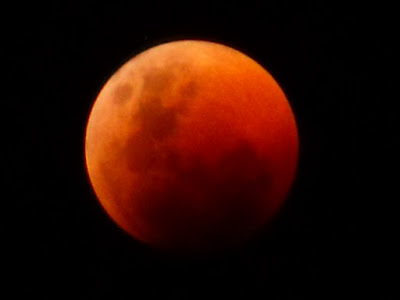
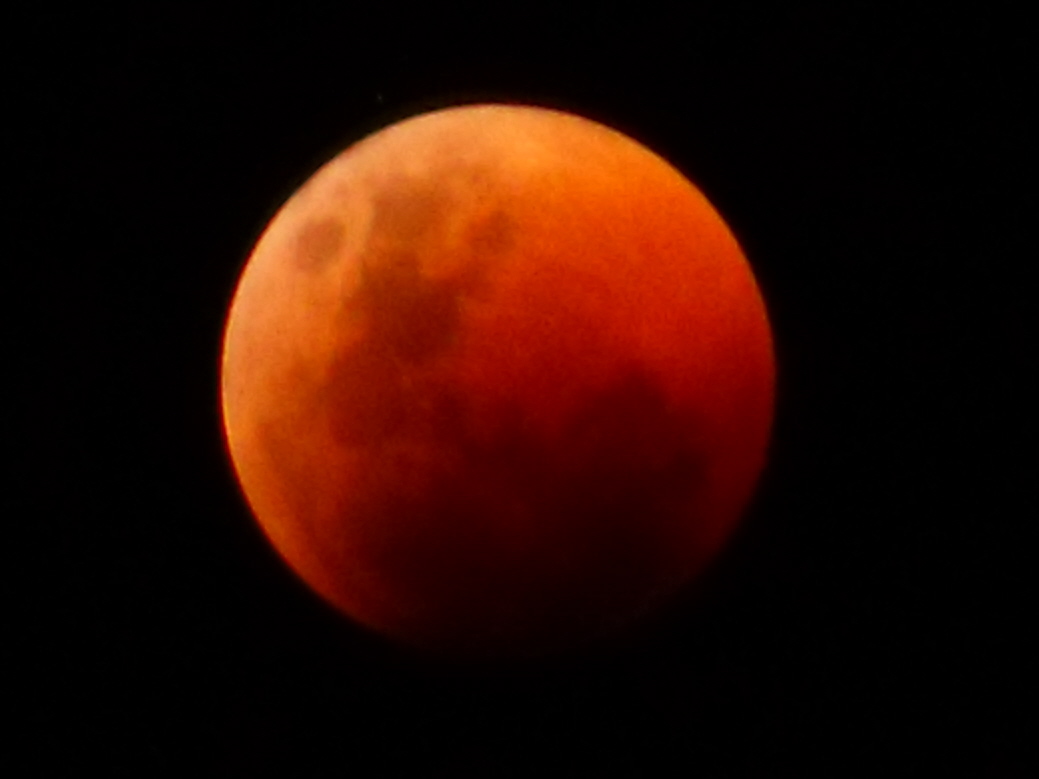
Lunar Eclipse 15 June 2011
Photo,s taken between 20:00 and 21:00 GMT in East London South Africa on the 15th June 2011


Tuesday, June 14, 2011
The battle of Copenhagen 2 April 1801
Battle of Copenhagen

Background
The battle was the result of multiple failures of diplomacy in the latter half of the 18th century. At the beginning of 1801, during the French Revolutionary Wars,In early 1801, the British government assembled a fleet at Great Yarmouth, with the goal of breaking up the League. The British needed to act before the Baltic Sea thawed and released the Russian fleet from its bases at Kronstadt and Reval (now
Although the Admiralty had instructed Parker to frustrate the League, by force if necessary, he was a cautious person and moved slowly. He wanted to blockade the Baltic despite the danger of the combination of fleets; Nelson wanted to ignore
Attacking the Danish fleet would have been difficult as Parker's delay in sailing had allowed the Danes to prepare their positions well. Most of the Danish ships were not fitted for sea but were moored along the shore with old ships (hulks), no longer fit for service at sea, but still powerfully armed, as a line of floating batteries off the eastern coast of the
Battle

Sketch of the battle
Parker had given Nelson the twelve ships-of-the line with the shallowest drafts and all the smaller ships in the fleet, while he himself stayed with the remainder of the fleet to the north-east of the battle, screening Nelson from external interference and moving towards On 30 March Nelson, and Rear Admiral Graves, accompanied by Captain Domett and the commanding officer of the troops, sailed in the hired lugger Lark to reconnoiter the Danish defenses at
Nelson's plan was for the British ships to approach the weaker, southern end of the Danish defences in a line parallel to the Danish one. As the foremost ship drew alongside a Danish ship, it would anchor and engage that ship. The remainder of the line would pass outside until the next ship drew alongside the next Danish ship, and so on. The frigate Desiree, together with small gun-brigs, would rake the Danish line from the south, and a force of frigates, commanded by Captain Edward Riou of HMS Amazon, would attack the northern end of the line. Troops would assault the Tre Kroner fortress once the fleet had subdued the Danish line of ships. Bomb vessels would sit outside the British line and bombard the Danes by firing over it. Should the British be unable to subdue the stronger, northern defences, the destruction of the southern ships would be enough to allow the bomb vessels to approach within range of the city and force negotiations to prevent the bombardment of the city.
With a southerly wind on the 1 April, Nelson picked his way through the shoals. However, the Agamemnon ran aground before entering the channel, and took no part in the battle. Then the Russell and Bellona ran aground on the Middle Ground, severely restricting their role in the battle. The loss of the three vessels required hurried changes in the line and weakened the force's northern end.
The Danish batteries started firing at 10:05am, the first half of the British fleet were engaged for about half an hour, and the battle was generally over by 11:30am Once the British line was in place there was very little manœuvring. The British ships anchored by the stern about a cable (240 yards) from the line of Danish ships and batteries, which was relatively long range, and the two exchanged broadsides until a ship ceased firing. The British encountered heavy resistance, partly because they had not spotted the low-lying floating batteries, and partly because of the courage with which the Danes fought. The northern Danish ships, which were rigged and manned, did not enter the battle but remained on station as reserve units, even though the wind direction forced Parker's squadron to approach only slowly.
At 1pm, the battle was still in full swing. Prøvesteenen's heavier fire would have destroyed the
Parker would have been able to see little of the battle owing to gun smoke, though he could see the signals on the three grounded British ships, with Bellona and Russell flying signals of distress and the Agamemnon a signal of inability to proceed. Thinking that Nelson might have fought to a stand-still but be unable to retreat without orders (the Articles of War demanded that all ranks do their utmost against the enemy in battle), at 1:30pm Parker told his flag captain, "I will make the signal of recall for Nelson's sake. If he is in condition to continue the action, he will disregard it; if he is not, it will be an excuse for his retreat and no blame can be imputed to him." Nelson ordered that the signal be acknowledged, but not repeated. He turned to his flag Captain, Foley, and said "You know, Foley, I only have one eye — I have the right to be blind sometimes," and then, holding his telescope to his blind eye, said "I really do not see the signal!". Nelson's second-in-command, Rear Admiral Thomas Graves, repeated the signal, but in a place invisible to most other ships while keeping Nelson's 'close action' signal at his masthead. Of Nelson's captains, only Riou, who could not see Nelson's flagship, the Elephant, followed Parker's signal. Riou withdrew his force, which was then attacking the Tre Kroner fortress, exposing himself to heavy fire that killed him.
It was at this time that the battle swung decisively to the British, as their superior gunnery took effect. The guns of the dozen southernmost Danish ships had started to fall silent owing to the damage they had sustained, and the fighting moved northward. According to British eyewitness accounts, much of the Danish line had fallen silent by 2pm. The cessation of firing left the way open for the British bomb vessels to approach
To the Brothers of Englishmen, the Danes 'Lord Nelson has directions to spare Denmark when she no longer resisting, but if firing is continued on the part of Denmark, Lord Nelson will be obliged to set on fire the floating batteries he has taken, without having the power of saving the brave Danes who have defended them.
Some British and Danish officers thought the offer of a truce a skillful ruse-de-guerre, and some historians have suggested that the battle would have been lost if it had not been adopted, as many of the British ships, like many of the Danish ships in the battle, could not carry on fighting much longer. Furthermore, neither side had deployed the ships which they both held in reserve, of which the Danish reserve was arguably the larger, and the truce effectually prevented this deployment at a moment where the British fleet was exposed. Though the British had lost no ships, most were severely damaged and three ships of the line had lost all their manoeuvrability and had at the time of the truce drifted within the range of the Tre Kroner's heavy guns which, up until then, like the other fortresses, had been out of range of the British ships. All action ceased when Crown Prince Frederick sent his Adjutant General, a Danish member of parliament, Hans Lindholm, asking for the reason for Nelson's letter. He was asked to put it in writing, which he did, in English, while making the joke: 'If your guns are not better pointed than your pens, then you will make little impression on
Lord Nelson's object in sending the Flag of Truce was humanity; he therefore consents that hostilities shall cease, and that the wounded Danes may be taken on shore. And Lord Nelson will take his prisoners out of the Vessels, and burn and carry off his prizes as he shall see fit.
Lord Nelson, with humble duty to His Royal Highness the Prince of Denmark, will consider this the greatest victory he has ever gained, if it may be the cause of a happy reconciliation and union between his own most gracious Sovereign, and His Majesty the King of Denmark.
which was sent back to the Crown Prince, and then referred Lindholm to Parker on the
At 4.30pm, the Danish flagship, the Dannebrog exploded, killing 250 men. By the end of the afternoon, three more badly-damaged British ships ran aground, including the Elephant. The Danish-Norwegian ships had been partly manned by volunteers, many of whom had little or no naval experience, and as they were not all listed after the battle, it is uncertain what the exact Danish-Norwegian loses were, but estimates vary between 1,135 to 2,215 captured, killed or wounded. The official report by Olfert Fischer estimated the Danish-Norwegian casualties to be between 1,600 and 1,800 captured, killed or wounded. According to the official returns recorded by each British ship, and repeated in dispatches from Nelson and forwarded by Parker to the Admiralty, British casualties were 264 killed and 689 wounded.
Of the Danish ships engaged in the battle, two sank, one exploded, and twelve were captured. The British could not spare men for manning prizes as they feared that further battles would come up so they burned eleven ships, and only one, Holsteen, returned to
Aftermath

Another view of The Battle of Copenhagen
The next day, Nelson landed in On the 12th April, Parker sailed to Karlskrona and on the British approach, the Swedish fleet returned to the port where Parker attempted to persuade them to also leave the League. Parker refused to sail into the eastern Baltic and instead returned to
This was not to be the end of Dano-Norwegian conflict with the British. In 1807 similar circumstances led to another British attack, in the Second Battle of Copenhagen.
Legacy
Even though a changed political scene after the death of Russian Tsar Paul reduced the political importance of the battle and material losses in the battle were of little importance to the fighting strength of either navy (the Danish side had taken great care to spare its first-class ships), the battle is nevertheless still remembered on the Danish side for the extraordinary valour of the Navy's personnel and the many Copenhagen volunteers who fought for hours against overwhelming odds.Ships involved
United Kingdom
Nelson's squadron
Polyphemus 64 (Captain John Lawford)Isis 50 (Captain James Walker)
Edgar 74 (Captain George Murray)
Ardent 64 (Captain Thomas Bertie)
Glatton 54/56 (Captain William Bligh)
Elephant 74 (flag of Vice-Adm. Lord Nelson, Captain Thomas Foley)
Ganges 74 (Captain Thomas Francis Fremantle)
Monarch 74 (Captain James Robert Mosse )
Defiance 74 (2nd flag of Rear-Adm. Thomas Graves, Captain Richard Retalick)
Russell 74 (Captain William Cuming)
Bellona 74 (Captain Thomas Boulden Thompson)
Agamemnon 64 (Captain Robert Devereux Fancourt)
Désirée 36 (Captain Henry Inman)
Amazon 38 (Captain Edward Riou )
Blanche 36 (Captain Graham Eden Hamond)
Alcmène 32 (Captain Samuel Sutton)
Jamaica 24 (Captain Jonas Rose)
Arrow (ship-sloop, Captain William Bolton)
Dart (ship-sloop, Captain John Ferris Devonshire)
Cruizer (brig-sloop, Cmdr. James Brisbane)
Harpy (brig-sloop, Cmdr. William Birchall)
Discovery (bomb, Cmdr. John Conn)
Explosion (bomb, Cmdr. John Henry Martin)
Hecla (bomb, Cmdr. Richard Hatherhill)
Sulphur (bomb, Cmdr. Hender Whitter)
Terror (bomb, Cmdr. Samuel Campbell Rowley)
Volcano (bomb, Cmdr. James Watson)
Zebra (bomb, Cmdr. Edward Sneyd Clay)
Otter (fireship, Cmdr. George M'Kinley)
Zephyr (fireship, Cmdr. Clotworthy Upton)
Parker's reserve
St George 98 (Captain Thomas Masterman Hardy)
Warrior 74 Captain Charles Tyler)
Defence 74 (Captain Henry Paulet)
Saturn 74 (Captain Robert Lambert)
Ramillies 74 (Captain James William Taylor Dixon)
Raisonnable 64 (Captain John Dilkes)
Veteran 64 (Captain Archibald Collingwood Dickson)
Denmark-Norway
Fischer's division in the King's Deep(order south – north. Only Siælland and Holsteen were in good condition, also note the age of the ships.)
Prøvesteenen 52/56 (3-decker battleship, rebuilt as a two-deck defensionsskib (Defence-ship), Kaptain L. F. Lassen
Wagrien 48/52 (2-decker ship of the line, 1775), Kaptajn F.C. Risbrich
Rendsborg 20 (pram), Kaptajnløjtnant C.T.Egede
Nyborg 20 (pram) Kaptajnløjtnant C.A. Rothe
Jylland 48/54 (Originally 70 gun 2-decker ship of the line, 1760), Kaptajn E.O.Branth
Sværdfisken 18/20 (radeau, 1764),Sekondløjtnant S.S. Sommerfeldt
Kronborg 22 (frigate, 1779), Premierløjtnant J.E. Hauch
Hajen 18/20 (radeau, 1793), Sekondløjtnant J.N. Müller
Dannebrog 60 (flag, 2-decker ship of the line, 1772), Kaptajn F.A. Bruun
Elven 10 (frigate, 1800), Kaptajnløjtnant H. Holsten
Grenier's float/Floating Battery No. 1 20, 1785
Aggershus 20 (Defensionsfartøj (Defence vessel) 1786), Premierløjtnant T. Fassing
Siælland 74 (2-decker ship of the line, 1776), Kaptajn F.C.L. Harboe
Charlotte Amalia 26 (Old Danish East Indiaman), Kaptajn H.H. Kofoed
Søehesten 18 (radeau 1795), Premierløjtnant B.U. Middelboe
Holsteen 60 (ship of the line, 1772), Kaptajn J. Arenfelt
Indfødsretten 64 (2-decker ship of the line, 1778), Kaptajn A. de Turah
Hielperen 16 (frigate), Premierløjtnant P.C. Lilienskiold
Fischer's division in the Inner Run
(These ships did not see action)
Elephanten 70
Mars 74
Sarpen 18-gun brig
Nidelven 18-gun brig
Danmark 74
Trekroner 74 (not to be confused with Tre Kroner fortress)
Sea
Land battery Sixtus ? guns.
Land battery Quintus ? guns.
Fortress Kastellet ? guns.
Subscribe to:
Posts (Atom)